DMARC check (policy and alignment)
DMARC tells receiving servers how to process unauthenticated mail and connects SPF and DKIM to your visible From domain.
- Free scan to see whether you are missing DMARC, stuck on
p=none, or missing reporting visibility. - Paid report to understand the safe path from monitoring toward enforcement.
The scan itself is on the homepage. This page is meant to clarify DMARC sequencing so you can judge whether enforcement is realistic yet.
What the DMARC report shows
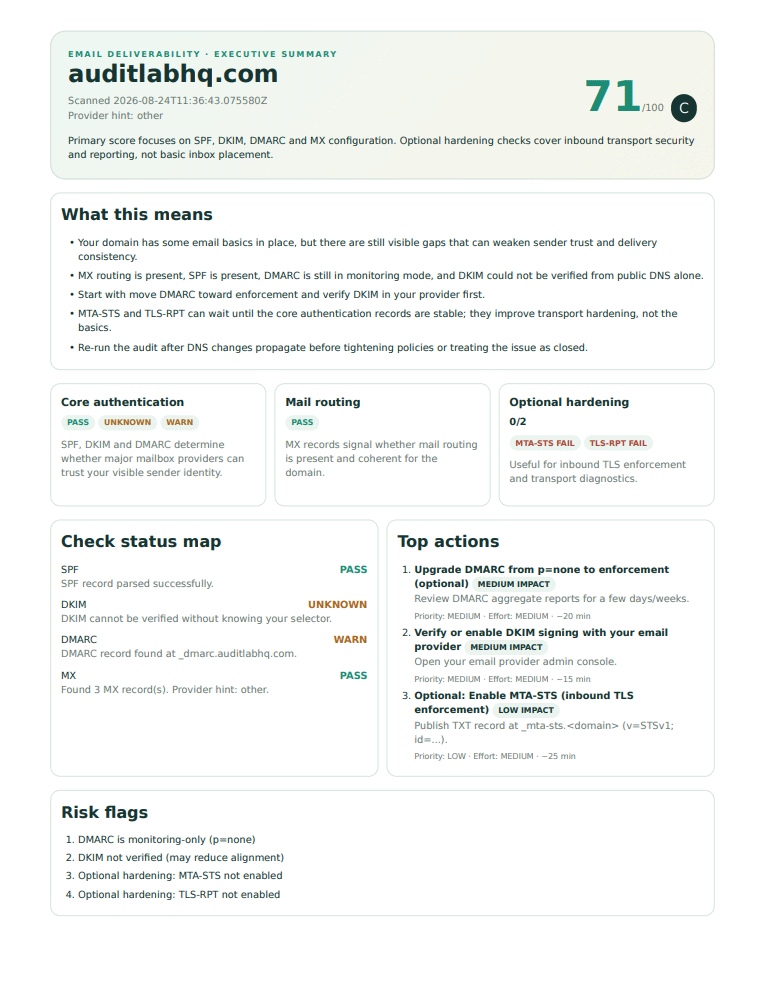
This is where the added value becomes obvious: the issue is rarely “DMARC yes/no”. It is usually policy sequencing, visibility and alignment confidence.
- The free scan answers whether something exists.
- The PDF answers what should happen next and what should wait.
- That reduces the chance of breaking legitimate senders when moving to enforcement.
Common DMARC pitfalls
No DMARC record
You lose visibility and policy control for unauthenticated mail.
p=none forever
Check the current policy and plan a safe path beyond monitoring mode.
No reporting address
Without RUA reports you cannot see who is sending on your behalf.
Strict alignment too early
Move carefully to avoid blocking legitimate senders.
Who this page is for
Marketing or ops teams
You need a fast explanation of why deliverability work is blocked and a document you can forward to the DNS owner.
Technical teams
You need the current policy, risk flags, recommended enforcement path and practical follow-up actions without digging through docs first.
FAQ
Start with monitoring, then move toward quarantine or reject when your senders are aligned.
No. It improves trust and anti-spoofing posture, but other factors still apply.